

What is EN ISO 20345?
EN ISO 20345 is the European/international standard defining the basic requirements for safety footwear. Under it, safety footwear has a toe cap resisting 200 J impact and 15 kN compression. Class codes show the properties added to this basic protection.
Classes compared
| Class | Properties | Typical use |
|---|---|---|
| SB | basic toe protection only | low-risk areas |
| S1 | SB + closed heel, antistatic, heel energy absorption | dry indoor areas, warehouses |
| S1P | S1 + penetration-resistant sole | dry sites with a risk of nails |
| S2 | S1 + upper resistant to water penetration and absorption | damp indoor and outdoor areas |
| S3 | S2 + penetration-resistant sole + cleated outsole | construction sites, outdoor work |
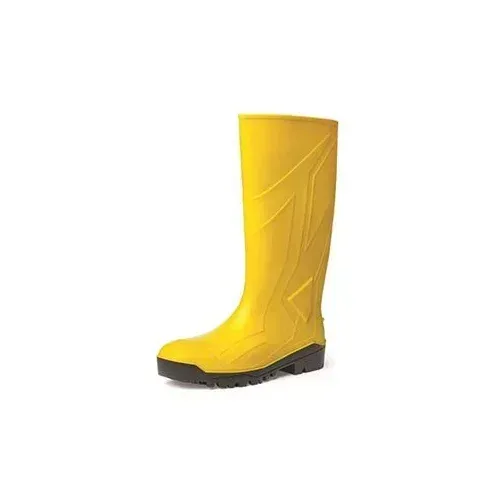
| S5 | moulded boot + penetration-resistant cleated sole | wet and muddy areas, concrete pouring |
Note: some class definitions were updated in the 2022 revision of the standard; the standard year and markings on the product label apply.
Which class should I choose?
- Where nails and sharp objects are present, at least S1P is recommended; S3 for outdoor and damp conditions.
- For concrete pouring and constant wet work, S5 boots are used.
- Ankle-height models reduce the risk of twisting on uneven ground.
How to find the size
Measure the foot from the heel (against a wall) to the tip of the longest toe. An approximate relation between EU size and foot length is two thirds of the EU size minus 1.5 cm (e.g. EU 42 ≈ 26.5 cm). Lasts vary by manufacturer, so allow half a size for thick work socks.
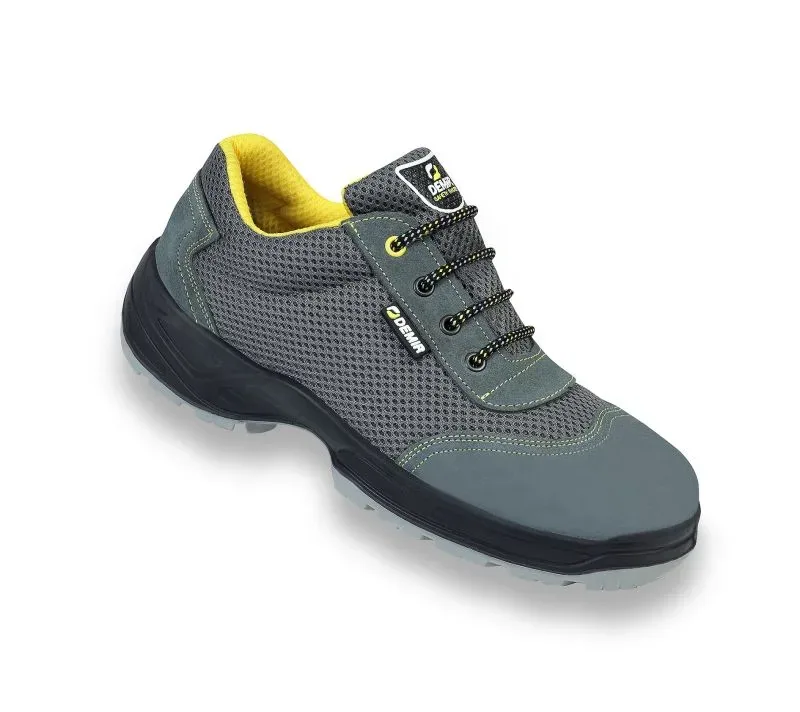
What do the additional markings mean?
| Marking | Meaning |
|---|---|
| SRC (old) / SR (2022) | slip resistance of the sole tested |
| HRO | sole resists contact heat up to 300 °C |
| CI / HI | sole insulation against cold / heat |
| WR | whole shoe water resistant |
| M | metatarsal protection |
| ESD | controlled conductivity against electrostatic discharge |
Toe cap and sole materials
Toe caps can be steel, aluminium or composite. Steel caps are economical and robust; composite caps are lighter, do not trigger metal detectors and conduct less cold. Penetration-resistant midsoles can also be steel or textile (composite); textile midsoles are more flexible and cover the whole sole.
Care and service life
- Clean leather uppers regularly and treat them with a suitable product; never dry shoes on a radiator.
- Replace the shoe if the sole profile is worn or the toe area is dented.
- Safety shoes exposed to a heavy impact may have lost their protection even if they look undamaged.